
The human body is constantly broadcasting. The heart, brain, and muscles all generate tiny electrical signals, and learning to read them is the science of biomedical signal analysis. It turns faint physiological activity into actionable clinical information, and it sits at the heart of nearly every patient monitor and diagnostic device.
The signals the body produces
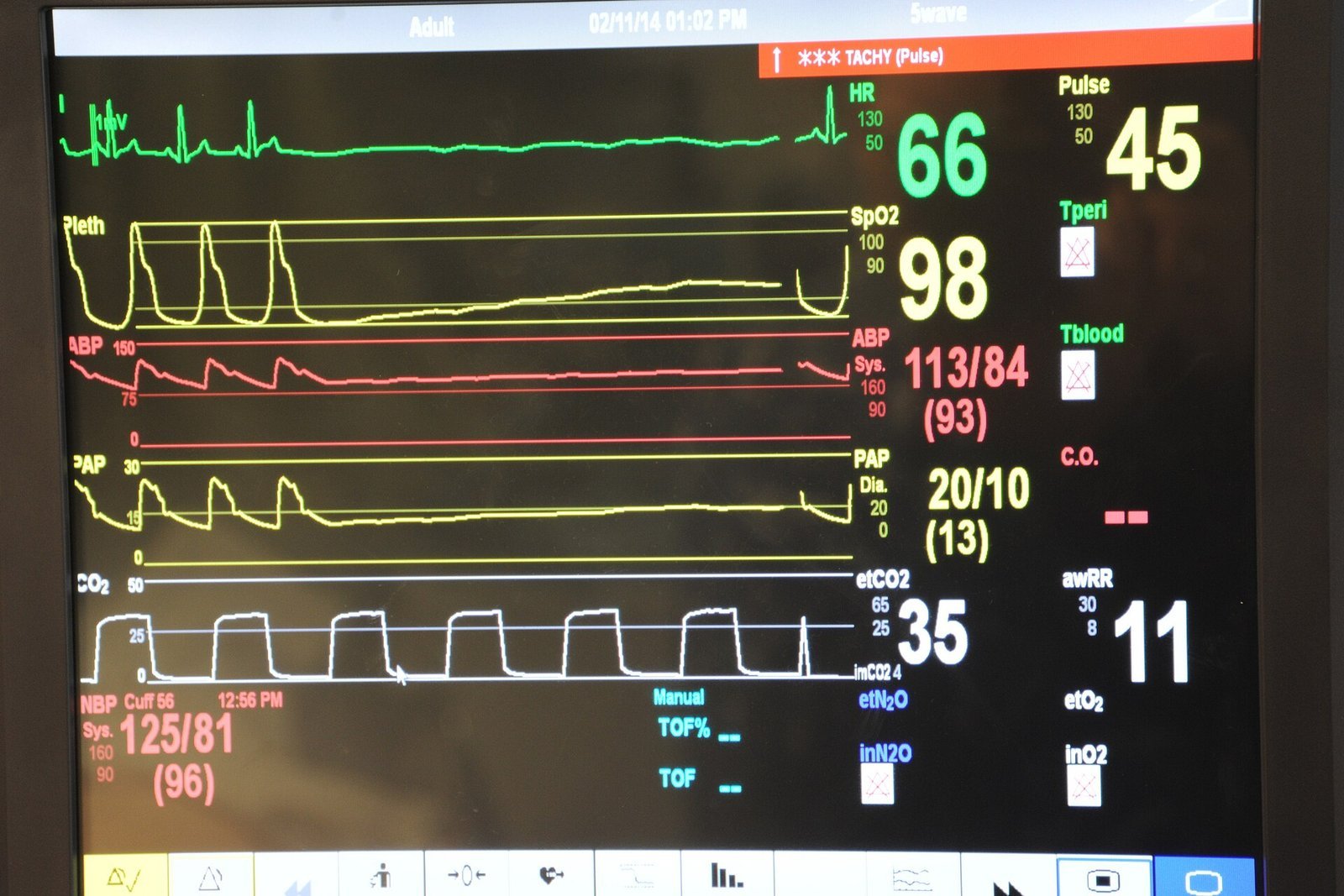
Three signals do much of the work in clinical practice, all captured non-invasively from the skin:
- The electrocardiogram (ECG) records the heart’s electrical rhythm, revealing arrhythmias and other cardiac conditions.
- The electroencephalogram (EEG) captures brain activity, used to investigate seizures, sleep, and levels of alertness.
- The electromyogram (EMG) measures muscle activity, helping diagnose neuromuscular disorders.
From raw signal to clinical insight
Raw physiological signals are noisy and easily corrupted by movement, electrical interference, and other artifacts. Engineers clean and interpret them with a toolkit of techniques, filtering to remove noise, and Fourier and wavelet transforms to move between the time and frequency domains, so that meaningful features stand out. It is this processing that lets an ECG monitor flag an irregular beat, or an EEG system identify the signature of a seizure.
The machine-learning era
The field has been transformed by machine learning. Deep-learning models now classify ECG and EEG patterns with remarkable accuracy, supporting earlier and more reliable detection of disease. The same foundations power emerging applications such as brain-computer interfaces, where decoded neural signals control devices directly. As these tools enter clinical products, they bring the algorithms themselves under regulatory scrutiny as software in a medical device.
Why it matters across health technology
Biomedical signal analysis is a connective skill: it underpins cardiology, neurology, critical-care monitoring, and wearable health technology alike. For engineers and clinical professionals, fluency in how signals are acquired, cleaned, and interpreted opens doors across the medical-device and digital-health sectors.
Learn to read the body’s signals
Aleph University’s Biomedical Signal Analysis course teaches the acquisition and processing of ECG, EEG, and other physiological signals, within a broader catalog of continuing-education courses in medical devices, health technologies, and regulatory affairs. It complements our guide to medical imaging systems.
Interested in biomedical signals? Request information and a custom quote for yourself or your team.